
Where is African beekeeping heading? The 49th Apimondia Congress in Copenhagen offered a key moment to answer that question, showing opportunities, limitations, and challenges facing Africa’s beekeeping sector today.
The event marked a strong African presence, with delegations from 23 countries across the continent: Algeria, Benin, Burkina Faso, Cameroon, Cote D’Ivoire, Djibouti, Democratic Republic of Congo, Egypt, Ethiopia, Ghana, Guinea Bissau, Kenya, Libya, Madagascar, Malawi, Mali, Morocco, Nigeria, South Africa, Togo, Tanzania, Zambia and Zimbabwe.
There was also strong participation at ApiEXPO, with more than 10 exhibitors, where Tanzania won the gold medal of the World Beekeeping Awardsfor the best large stand of the fair.
Despite this success, significant obstacles remain. Visa restrictions prevented some countries and individuals from attending the congress, limiting the participation. Exhibitors also faced challenges, particularly due to the requirement to pay exhibition fees one year in advance, a constraint that reduced the presence of additional African companies and associations.
For African delegations, the heart of the 49th Congress were two key round tables. The first, promoted by South Africa, focused on challenges and opportunities in opening commercial channels with the European Union. The second, the Africa Roundtable reviewed activities and projects led by the Apimondia’s Regional Commission for Africa.
Regional Commission which also confirmed David Mukomana as chairman.
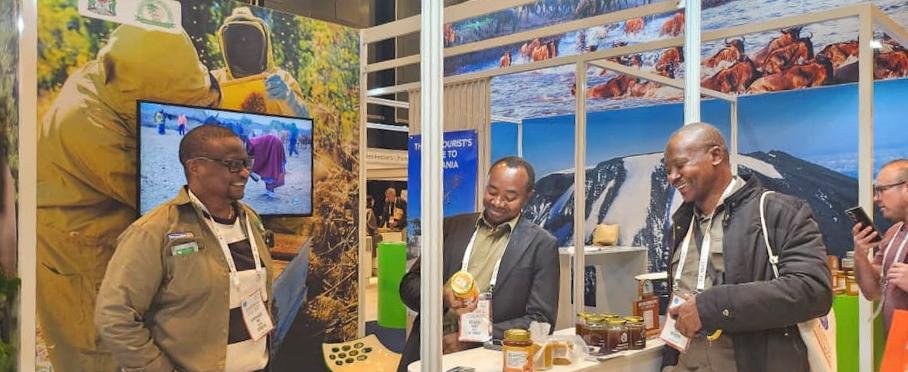
The Africa Roundtable brought together delegates from across the continent and from other part fo the world, highlighting how beekeeping is rapidly emerging as a powerful driver of rural development, environmental conservation, youth empowerment, and regional cooperation. In many African countries, beekeeping projects are already helping marginalized communities, including people living with disabilities, to improve their livelihoods.
Concrete examples came from East Africa, where projects in Kenya demonstrated how young people are being trained and supported to become beekeepers. These initiatives are creating new income opportunities, reducing social vulnerability, and restoring hope, particularly for young women affected by harmful traditional practices such as female genital mutilation.
The importance of regional cooperation and youth-focused strategies was also emphasized through experiences in West Africa. There, beekeeping has been identified as a practical response to unemployment and migration, offering local opportunities through honey, beeswax, and other hive-based value chains.
Public institutions emerged as another key factor. Local and regional governments play a crucial role in creating enabling environments for small farmers through supportive policies, infrastructure development, and political commitment. Such support can help transform beekeeping from a subsistence activity into a sustainable rural industry.
Environmental protection and bee conservation were central themes, by the Nyuki Marathon, an initiative designed to raise global awareness about the importance of bees and pollinators where each runner is seen as a “pollinator of change.” The Nyuki Marathon began as a single event has grown into a continental movement combining sport, advocacy, and environmental action, with the next edition scheduled to take place in Zimbabwe.

Strong attention was also given to indigenous knowledge. Studies on traditional uses of honey in African societies revealed its deep cultural and medicinal value, documented as far back as the 17th century. Participants stressed the urgent need to document and scientifically validate this knowledge so it can contribute to modern apiculture and health systems.
The Africa Round Table concluded with a forward-looking vision: The Africa we want – a proposed 25-year strategic plan for African that involves apiculture. The plan aims to promote sustainable beekeeping as a tool for environmental protection, economic resilience, and community empowerment across the continent.
For the future the upcoming key events are:
- Youth Summit, Nairobi, Kenya – early May 2026
- Nyuki Marathon, Harare, Zimbabwe – May 2026
- 4th Africa Apimondia Regional Symposium, Kampala, Uganda – August 2026
- Tanzania Honey Show – October 2026
Then the next appointment will be the 50th Apimondia Congress in Dubai in 2027.