Apimondia Copenhagen Congress report

Copenhagen, 23-27 September

The 49th Apimondia Congress in Scandinavia concluded its 2025 event, bringing together beekeepers, researchers, industry representatives, and policymakers from around the world to exchange experiences on beekeeping affairs. This edition brought new initiatives like Bridging Research & Practice Symposia, Global Honey Talks, The Global Honey Bar, World Beekeeping and Student Poster Awards, and the delivery of the Annual Report 2024.
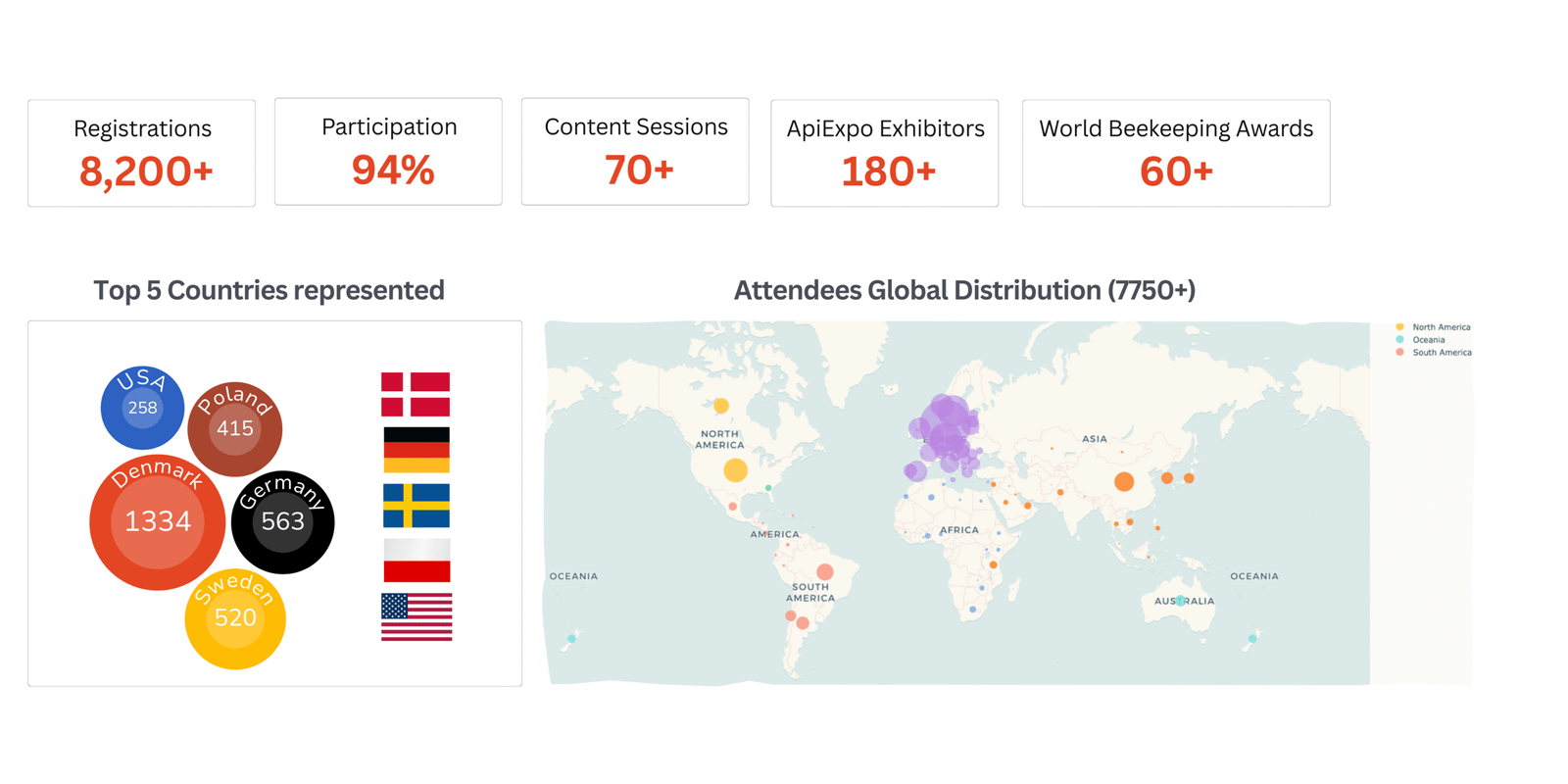
Key Impact Metrics

Key Highlights

General Assembly & Annual Report 2024

  • Annual Report 2024 featuring including financial statements and Commissions’ work
  • Plans for regular webinars of the Regional Commissions
  • Proposal to create an International Certification for ApiTourism
  • Proposal to establish the Apimondia Think Tank to tackle solutions for global beekeeping challenges

The Global Honey Bar

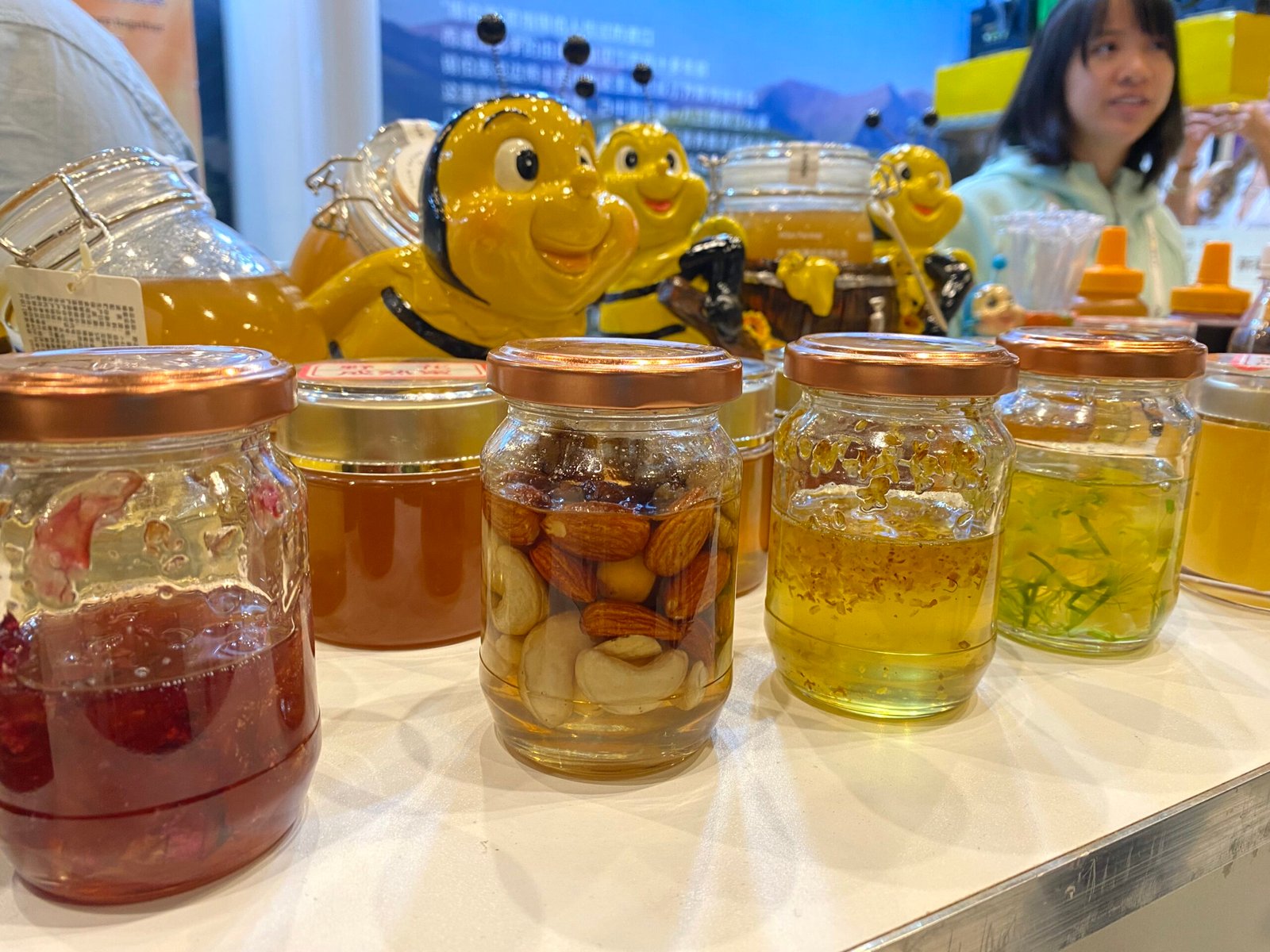
  • Showcased of 250 honeys from around 42 countries
  • 120,000 tasting sticks used
  • An exquisite honey taste experience to explore aromas and flavours
  • Types of honey, e.g. buckwheat, wildflower, heather, eucalyptus, cherry blossom, Manuka, avocado, bush and tropical honeys.

Global Honey Talks

  • 6 sessions of lectures dedicated to honey quality, sensory and storytelling
  • Speakers explored Manuka authentication, stingless bee honeys, honey judging systems, climate-change adaptation in honey production, sustainable African honey paths, honey sensory analysis Bridging Research & Practice (B-RAP)
  • One of the Core Projects of CoLOSS – Honey bee Research Association for the prevention of colony losses
  • 2 sessions dedicated to share how to turn bee science into tools and training for beekeepers, veterinarians and advisors
  • Speakers covered learning programmes, digital tools, gamification for bee health, hotlines and qualification frameworks for advisors, and technology transfer

World Beekeeping Awards (WBA)

Innovation & Innovation category topped all the others, showcasing 93 creative solutions and prototypes:

  • 299 exhibits from 36 countries
  • 20 categories, including Mead, Beeswax, Photography, Printed material and innovations
  • Gold Medal: Hivekeepers (Australia) for a fast honey extraction system 
  • Silver Medal: Bio Inovatsi (Bulgaria) for a manual, electricity-free uncapping machine
  • Bronze Medal: Roman Dvykaliuk (Ukraine) fora propolis collection machine, Łysoń Beekeeping Company (Poland) for a portable apitherapy device, and Slobodan Dolasevic (Serbia) for a laboratory cage for bee experiments


Storytelling and practical knowledge were celebrated in the Book category

Children’s books 

  • Gold: Little Master Beekeeper (Poland)
  • Silver: Abeja del Uruguay
  • Bronze: Bee Hive (Australia)


General books

  • Gold: The World Atlas of Honey by Carla Marina Marchese
  • Silver: Bee Club
  • Bronze: UAE beekeeping manual.


Manuals

  • Gold: Beekeeping and Veterinary Medical Practice
  • Silver: The Honey Bee Solution to Varroa
  • Bronze: Simple Guide to Old Polish Mead


Scientific books

  • Gold: Where Do the Bees Go?
  • Silver: Stingless Bee Nest Cerumen and Propolis
  • Bronze: Sustainable Honey Bee Breeding


Magazines 

  • Gold The Beekeeper Quarterly (UK)
  • Silver Bee Craft (UK)
  • Bronze Deutsche Bienen-Journal (Germany)


Student Poster Awards

  • 609 Posters presented with Bee Health and Beekeeping Technology and Quality having the largest selection
  • First time, each of the 7 Apimondia Scientific Commissions awarded one student poster (72 posters applied)


POSTER AWARDEES

  • Apitherapy: Šarūnė Sorkytė (Lithuania) | Preserving boar semen quality parameters with propolis extracts during long-term storage
  • Bee Biology: Gabriel Reginatto Silva (Brasil) | Food storage behaviour in stingless bee Melipona quadrifasciata
  • Bee Health: Pablo Juri (Uruguay) | Evaluation of screen and sticky bottom boards for the control of Varroa destructor in Africanized and European honeybees
  • Beekeeping Economy: Josely Borges Ortiz (Mexico) | A new device to detect the adulterated honey: Business plan
  • Pollination & Bee Flora: Chiara Benedetta Boni (Italy) | Unmanaged wild bees and managed honey bees do not share pollen resources: investigation on interspecific trophic competition in three National Parks
  • Rural Development: Sandra Barbosa (Portugal) | Enhancing propolis production: A strategic approach to boost beekeeping profitability through effective mediation

Technology and Quality: (in spotlight) Lucía Almeida Kutscher (Uruguay) | Antimicrobial activity of honeydew honey that caused larvae mortality (River Disease) in Uruguay

Scientific Program

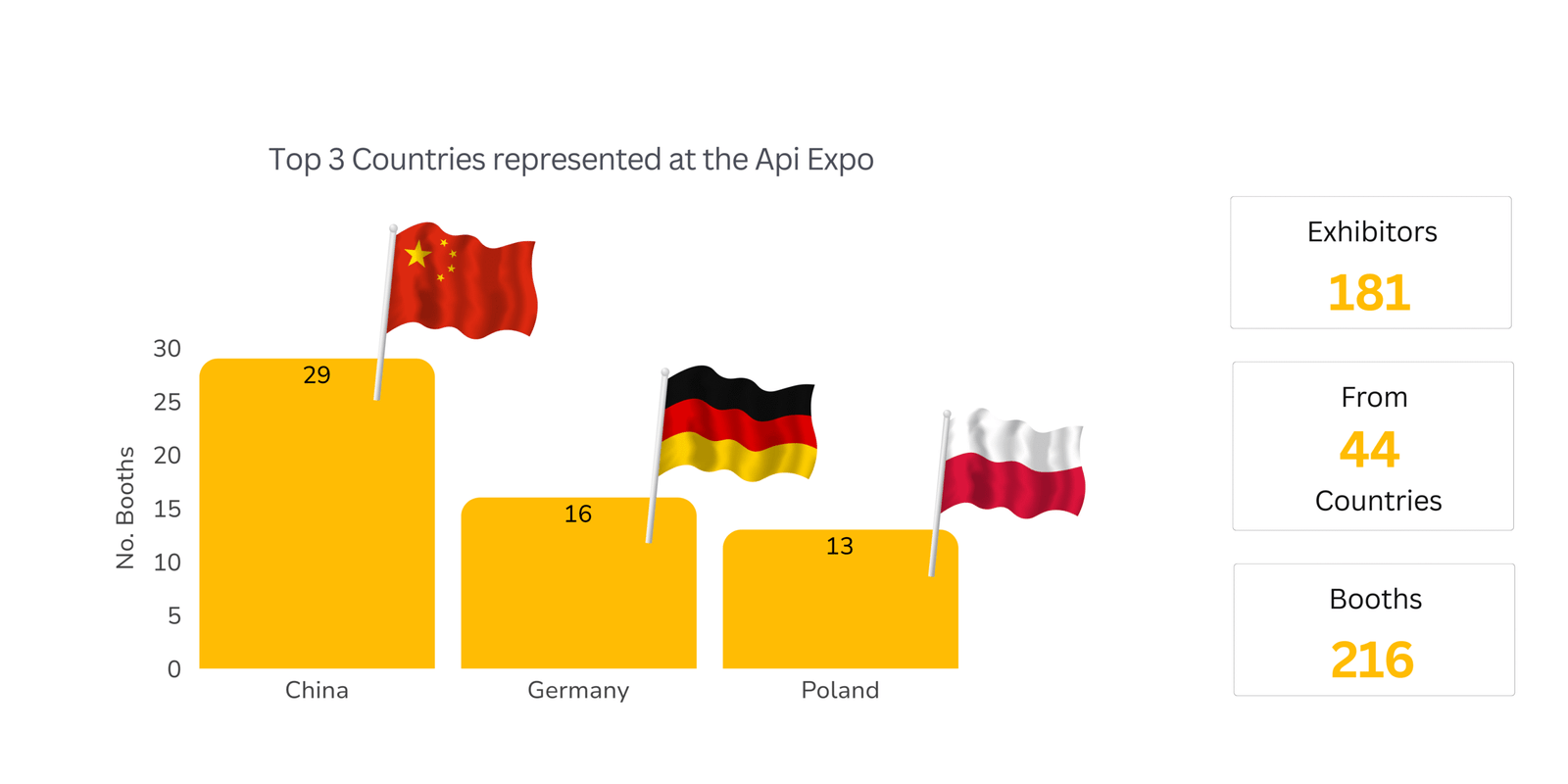
ApiEXPO

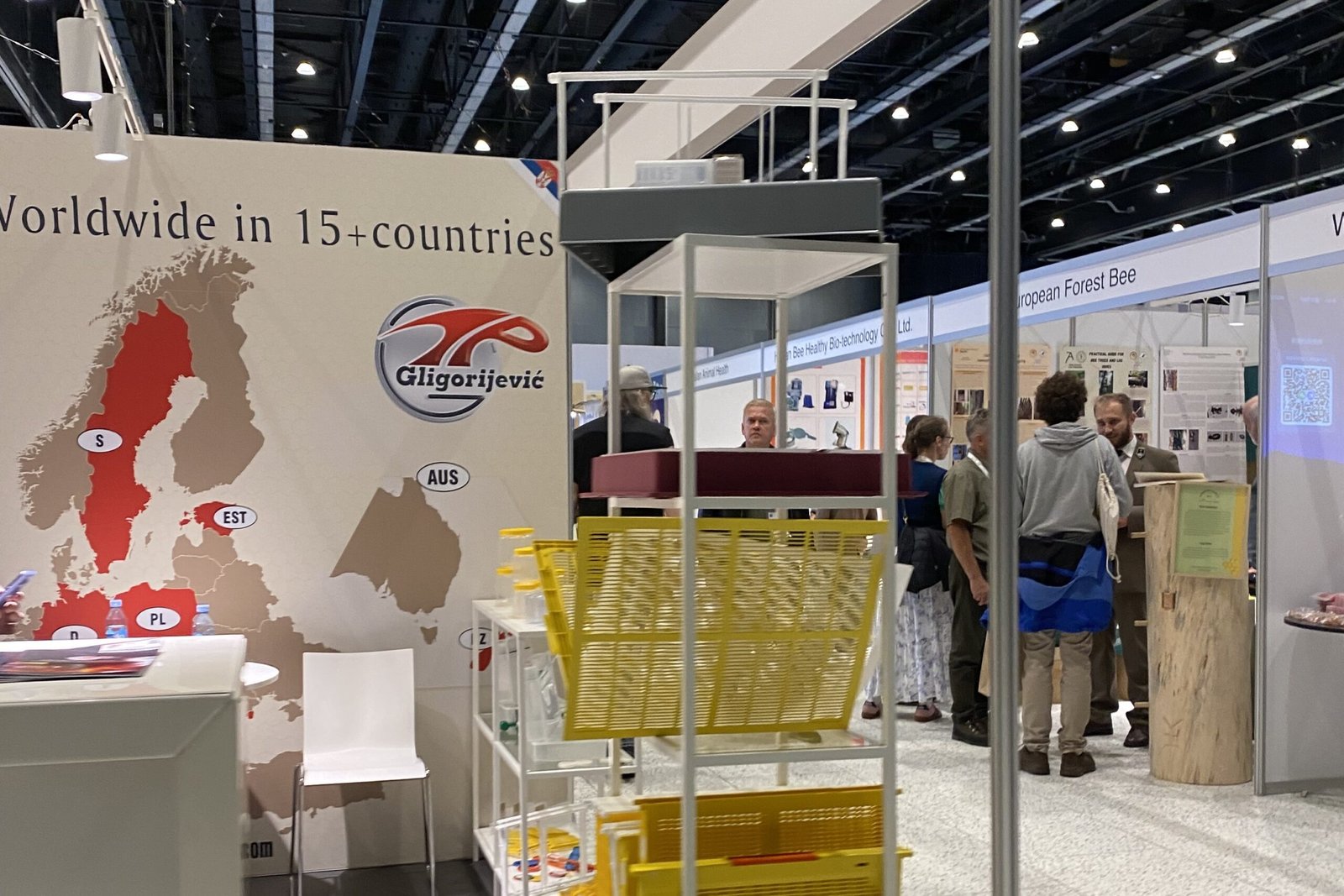
China, Germany and Poland showed the strongest presence
More Highlights

Technical Tours

  • 16 Technical Tours across the 3 host countries (Denmark, Sweden and Norway)
  • 640 participants from 49 countries.


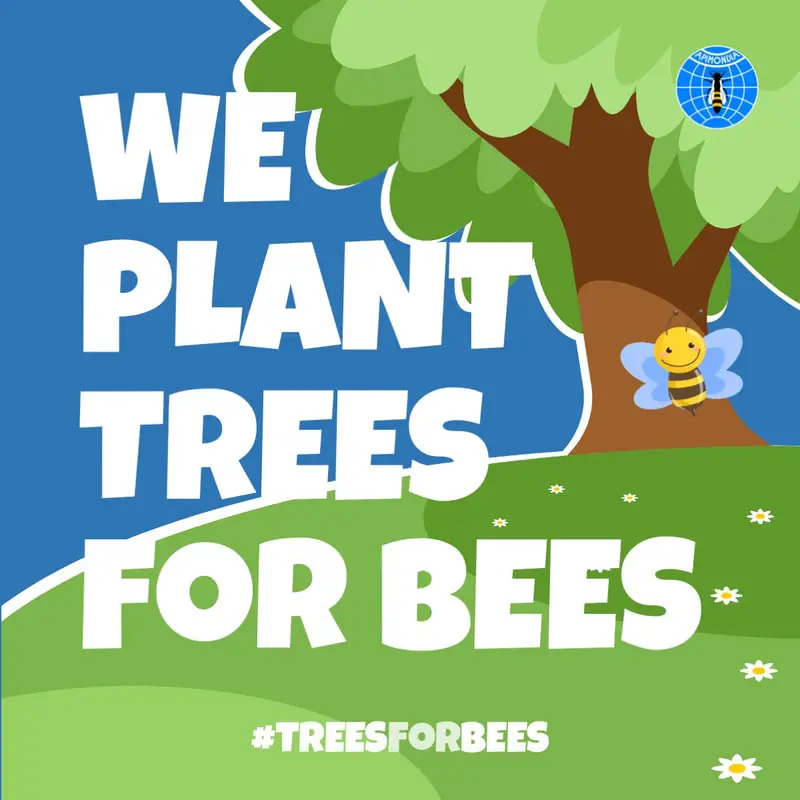
Trees for Bees Campaign since 2023

  • Apimondia promotes a year-round Campaign to encourage planting melliferous trees and bushes for pollinators.
  • The Outstanding Achievement Award was jointly attributed to:
    • Peter MWANGI (Beekeeping Association)
    • Jody & Ralph MICHELL (Kaimai Range Honey, New Zealand) 
  • Apimondia invites schools, beekeepers, associations, and citizens to plant trees, which are vital for pollinators’ survival and food security.